The Priestess

She got up, brushing soil and leaves from her tunic. Grass stains decorated her knees. She whistled to herself as she washed her hands of the ashes, glancing at the statue on occasion. Światowid’s wooden face looked back, unblinking.
Radomiła had served her god for four summers now, burning plants at his altar in sacrifice, and sweet-smelling herbs to keep the grove from stinking of smoke. Married to her god as priestesses were, she felt as though she were above the other women in the village. She lived apart from them, in the small shrine by the lake, and she was treated with more respect than anyone- after all, she alone could ask for the protection of their deity. She was the only priestess, the priest Zorian having left her to tend to the grove as he went to eternal rest.
But it was not just the status that fuelled her. She loved her god. She loved the quiet of the grove. She loved learning the language of the spirits, and she loved knowing how to help people, which god to sacrifice to, what to sacrifice, she knew which demons to keep away and how- it made her feel useful.
She alone knew what ointments to rub on the chest of the fevered Dobromir. She alone knew what potion to brew for the period pains of Dziadziumiła. She alone knew what to burn over the body of Zorian, so that he would rest in death.
That day, as she finished praying, as she burnt sweet-smelling herbs and chanted songs of thanks, she saw him approach. On his horse, moving towards her, villagers following behind him, was the king Mieszko. In his right hand, he held a wooden cross. Something about him made her very afraid.
‘Rejoice!’ He said, in a clear, kind voice that made her skin crawl. ‘I have seen the truth: there is one god, all-loving, all-powerful. He demands no sacrifice, only prayer. We will build him an altar here, on the ruins of the false god.’ He turned to her, and the look of pity and well-meaning in his eyes made her want to throw up. ‘Pretty girl, you no longer have to perform this arduous and thankless work. Return to the village.’
‘No.’ Without realising it, she had been moving closer to the wooden idol of Światowid, as if her god could offer her some protection against this strange demon in the skin of a man. Now, she took the idol from where it stood, and ran towards the watchtower which loomed over the lake. Her lake. She heard the drumming of feet and hooves, and did not turn, because she could not afford to slow down. She ran like she had never ran, up the stairs and onto the platform, cheeks flushed peony-pink in exhaustion.
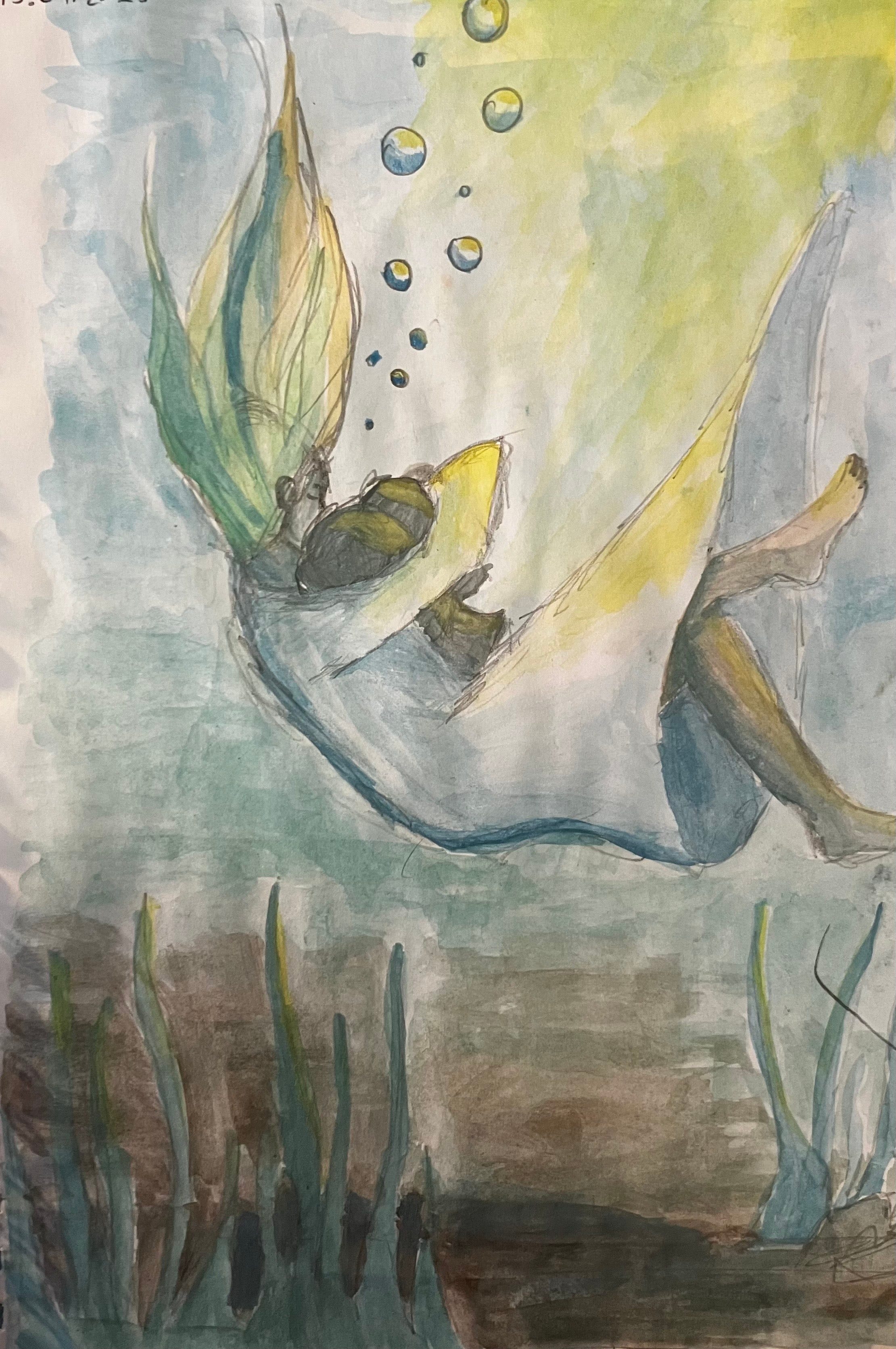
Radomiła looked out at the solid ground which unfurled at her feet, and back at the lake. The king was calling out, waving his foreign symbol of his foreign deity, that had never dwelled in the forest of her ancestors, that had never walked among her gods. She looked at her king, her country, her Poland, and back to her god, her forest, her people. Pressing the birchwood to her chest, closing her eyes, she jumped. She forced herself to open her eyes before she hit the water, to look to her god one last time. Światowid’s wooden face looked back, unblinking.
Later they would say she had been the image of misbegotten beauty as she fell. Her loose white tunic looked like wings, they said, and billowed around her like wings and goose feathers. The wreath that decorated her wild, near-white hair fell slower than she did, the image of a halo encircling her head. Later, the king would forbid that she was described this way, like an untamed angel, and not a dirty little pagan girl, with grass stains on her knees and bugs in her hair. Those who saw her that day would know that she was both.